The NeuroTriad Model
Applied Neuroscience for Trauma Recovery, Regulation, and Resilience
Understanding the brain changes how we understand healing. Developed by Dr. Kate Truitt, the NeuroTriad Model integrates trauma-informed care, applied neuroscience, and resilience-focused clinical tools through Brain Partnership.
Developed by Dr. Kate Truitt
A Brain-Aligned Framework
Developed by Dr. Kate Truitt, the NeuroTriad Model brings together three foundational pillars—Trauma-Informed, Neuroscience-Based, and Resilience-Focused—through Brain Partnership. The model gives mental health and allied healthcare professionals practical tools to recognize protective patterns, strengthen emotional regulation, support trauma recovery, and cultivate resilience. Clinical frameworks translate research on interoception, autonomic functioning, attention, memory, and neuroplasticity into thoughtful conceptualization and intervention.
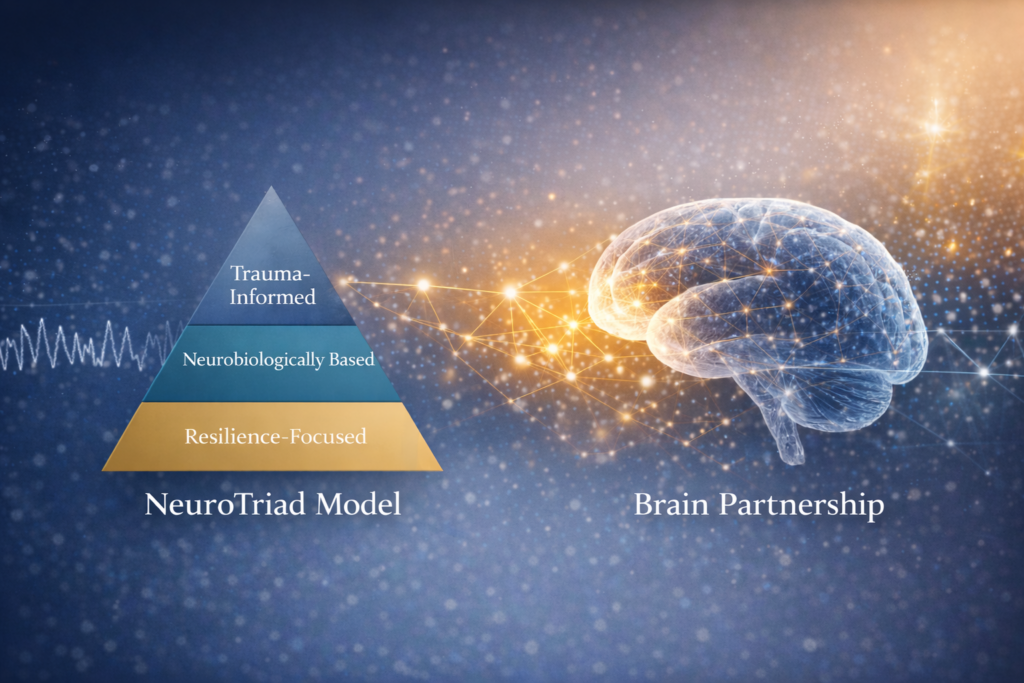
THE NEUROTRIAD MODEL
Three Pillars. One Integrated Clinical Framework.
Understanding protective patterns, mapping brain–body processes, and strengthening adaptive change through an integrated clinical lens.
INTEGRATING PRINCIPLE
Brain Partnership
01 / UNDERSTAND
Trauma-Informed
Understand protective patterns
Recognize how stress and lived experiences shape protective responding and expectations about safety, belonging, and agency.
02 / MAP
Neuroscience-Based
Map brain–body processes
Connect interoception, autonomic functioning, attention, memory, and neuroplasticity to case conceptualization and intervention.
03 / STRENGTHEN
Resilience-Focused
Strengthen adaptive change
Support flexible responding through intentional learning, supportive relationships, repetition, and adaptive-state practice.
Together, these pillars guide clinical formulation, intervention selection, and the development of flexible, adaptive responses.
Why it matters
Built for modern clinical practice
The NeuroTriad Model helps clinicians connect neuroscience to real-world care through a framework that is structured, practical, and designed for meaningful therapeutic change.
01
Trauma Recovery
Translate current neuroscience into practical interventions that support recovery from stress, trauma, and dysregulation.
02
Emotional Regulation
Use structured tools that help clients build adaptive states, regulation capacity, and resilience over time.
03
Clinical Integration
Move beyond theory alone with a model designed for real-world use across mental health, behavioral health, addiction treatment, psychiatric, medical, occupational therapy, school, and community-based support settings.
04
Professional Growth
Strengthen your practice through advanced training, consultation, continuing education, and a clear certification pathway.
FEATURED OPPORTUNITIES
Explore Upcoming Training & Professional Learning
Discover opportunities to learn the NeuroTriad Model, connect with neuroscience research, and support sustainable care for helping professionals.
Live Clinical Training

FIRST PUBLIC IN-PERSON TRAINING
NeuroTriad Model Training — Los Angeles
January 13–14, 2027 · 8:00 a.m.–4:30 p.m. Pacific
Learn directly with Dr. Kate Truitt through two immersive days of neuroscience, practical protocols, and trauma-informed clinical application at the California Endowment.

LIVE ONLINE CLINICAL TRAINING
NeuroTriad Model Training — Live Online
May 14–15 & May 21–22, 2027 · 8:00 a.m.–12:30 p.m. Pacific
Four interactive half-day sessions, with an integration week between training weekends. Registration includes the NeuroTriad training book and five clinical demonstration videos.
Research, Connection & Professional Well-Being

RESEARCH & CONVERSATION
NeuroTriad Journal Club
Led by Dr. McKenna Walsh
Engage in thoughtful discussion of emerging neuroscience, traumatic stress, resilience, and the translation of research into clinical practice. Meeting details will be announced.

PROFESSIONAL WELL-BEING
Sustainable Compassion
Burnout & Compassion Fatigue · Starts February 10, 2027
A free, 12-week live-online learning group facilitated by Rebecca Turner, LMFT, BCN. Explore the survival brain, stress-driven patterns, and practical approaches to resilience.
Joining the interest list does not confirm enrollment in the group.
Pathways
Train, Apply, Certify
NeuroTriad Model clinical training, certification pathway, consultation groups, continuing education opportunities, modular courses, and related educational resources for trauma-informed and neuroscience-informed practice.

Clinical Training
Explore in-person and live online NeuroTriad training for mental health and allied healthcare professionals. Upcoming programs include the January 2027 Los Angeles training and four half-day virtual sessions in May 2027.

Training and Certification
Build fluency in the NeuroTriad Model through structured training, consultation, case application, knowledge assessment, and skills demonstration. Explore the requirements and next steps for practitioner certification.

Consultation and Resources
Extend your learning through consultation, research, and practical resources that support ethical clinical application and ongoing development of neuroscience-informed skills. Explore the NeuroTriad Journal Club for thoughtful conversations about emerging research and clinical translation.
The model
Science Into Practice
The NeuroTriad Model helps clinicians connect the science of stress, trauma, neuroplasticity, and memory reconsolidation with practical tools for healing.
Built for mental health and allied healthcare professionals, including clinicians, behavioral health providers, addiction treatment professionals, psychiatric and medical team members, occupational therapists, school and community-based support professionals, and other qualified practitioners working within their scope, it offers a structured path for applying brain-based care with rigor and warmth.

Research & Innovation
Explore the Truitt Institute’s work at the intersection of applied neuroscience, professional learning, and research-informed clinical practice. Discover our Sustainable Compassion initiative addressing burnout and compassion fatigue, and the NeuroTriad Journal Club, a community for critical scientific conversation.
Explore our initiatives: Sustainable Compassion · NeuroTriad Journal Club